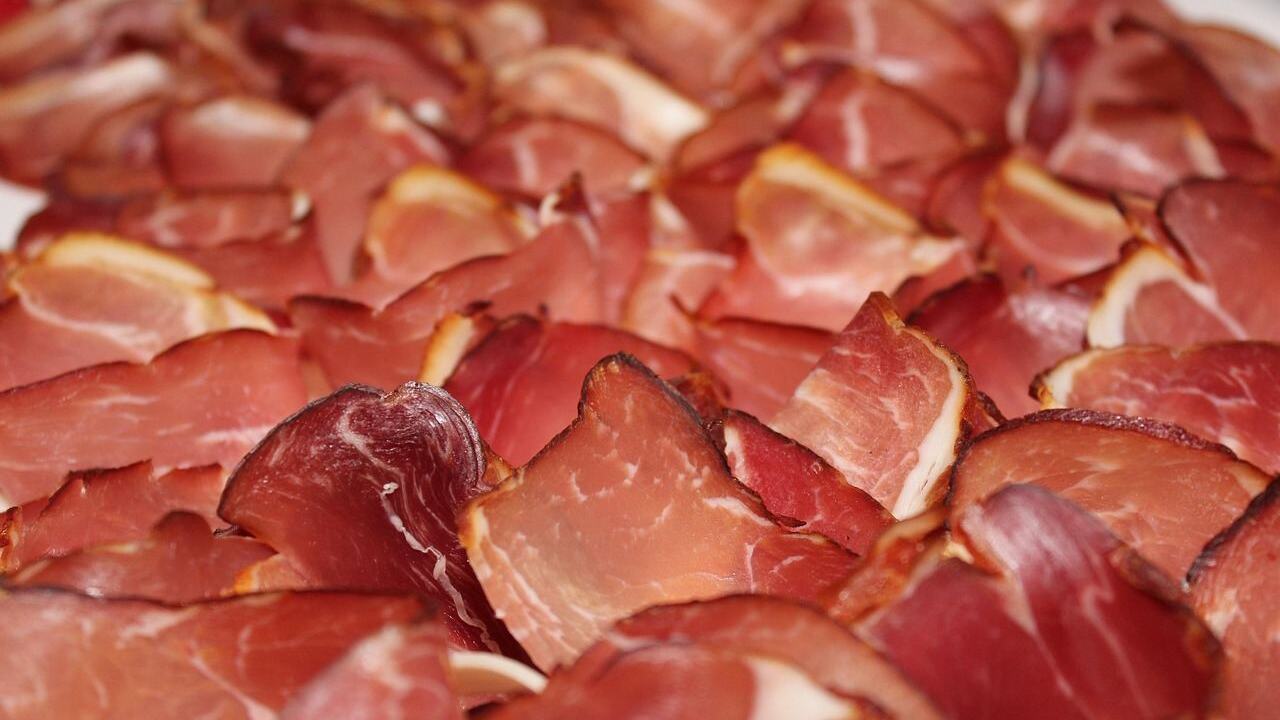
Wondering what makes Bayonne ham different from other dry-cured hams? It is a pork leg salted with spring salt and dried in France’s Adour Basin, protected by a PGI since 1998. Here is how it is cured and served.
This ham is one of the best-known products of Béarn cuisine, because its salt comes from Salies-de-Béarn.
| Item | Value |
|---|---|
| Protected status (PGI) | Guaranteed since 1998 |
| Salting and maturation area | Adour Basin, in the Southwest of France |
| Salt used | Spring salt from Salies-de-Béarn |
| Pig origin | Born and raised in the greater Southwest of France |
| Minimum age | 7 months (most are 9 or 10 months old when sold) |
| Hallmark | “Lauburu” Basque cross burned into the rind |
Figures come from the Consortium du Jambon de Bayonne and Wikipedia. Rules and timings can change, so check the sources before you rely on them.
What the PGI label guarantees
The Protected Geographical Indication ties the ham to a place. The Consortium du Jambon de Bayonne says this territorial anchoring has been guaranteed since 1998 by the PGI, according to its own English-language page.
Two geographic rules matter most:
- Pigs: the ham comes from pigs born and raised in the greater Southwest of France.
- Curing: all production stages happen within the Adour Basin, which covers the Pyrénées-Atlantiques department and neighbouring cantons of Gers, Hautes-Pyrénées and Landes.
The basin is bordered to the west by the Atlantic Ocean, to the south by the Pyrenees and to the north and east by the Adour River. Wikipedia adds that the pork must come from one of eight defined pig breeds, and that transport, slaughter, cut size and minimum fat cover are all specified.
Where the name and the tradition come from
A Béarn guide says the matured ham was first sold under its local name. It became Bayonne ham as ham exports grew through the port city, according to the same guide.
Taste France says the product owes much to its terroir and to the far-reaching influence of the Port of Bayonne. It also repeats a 14th-century legend in which Gaston Fébus, Count of Foix, wounded a boar on a hunt, and the boar was later found perfectly preserved.
Oversight today sits in Béarn. Wikipedia says the right to use the name is the responsibility of the Consortium, which is based in Pau. The Béarn guide counts 27 other cured ham producers in the Adour Basin alongside the Maison du Jambon de Bayonne.
That means the name covers many makers, not one brand. What they share is the PGI charter, the regional salt and the Lauburu stamped on every leg.
The curing steps, from salt to Lauburu
The Consortium lists seven stages in its production: salting, resting, drying, coating, maturing, testing and sealing. The sources below fill in what happens at each one.
- Salting. The fresh ham is rubbed and covered with salt. Taste France describes about 10 days in a refrigerated salting room.
- Resting. The hams hang in a cool place and go through winter and then spring temperatures, according to a Béarn tourism guide.
- Drying. Hung from a beam, the ham starts its long maturation.
- Coating (pannage). The exposed muscle is covered with pork fat and flour, which slows the drying.
- Maturing. This stage gives each ham its own flavor.
- Testing. Producers judge the characteristics of each ham.
- Sealing. The Lauburu is burned into the rind and printed on the label.
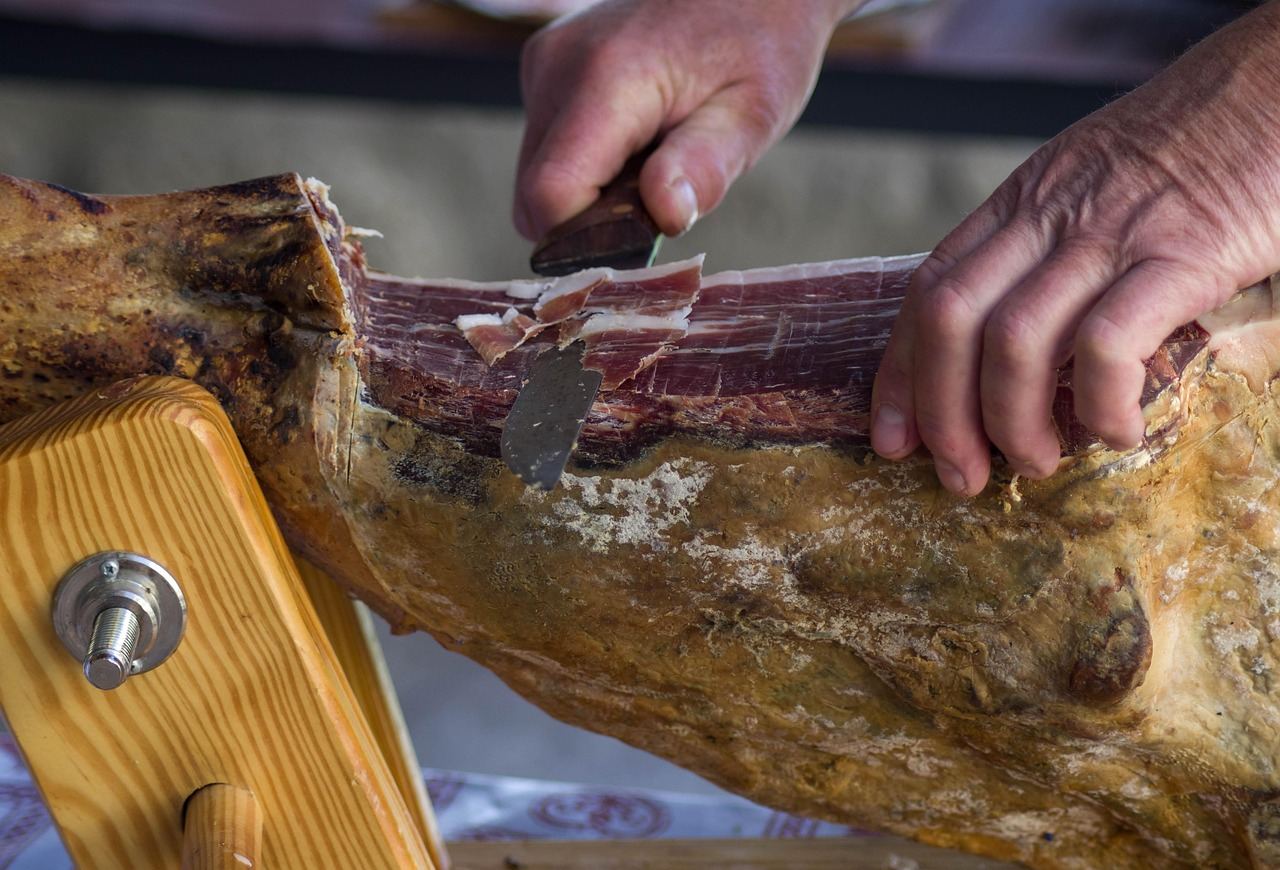
Wikipedia describes the old calendar: hams were left in a drying room at about 6 to 8 °C until the end of January or early February. The pannage then reduces how fast the meat dries during the warmer months of March, April and May.
Many producers also rub a paste of piment d’Espelette, a Basque chile pepper, into the skin. Wikipedia says this gives the finished ham a unique tang.
Why Salies-de-Béarn salt matters
The salt is the most Béarnais part of the story. A Béarn guide calls Salies-de-Béarn salt a pure and natural spring salt used to rub and cover the fresh ham.
Taste France adds that this salt is exceptionally pure and features high levels of trace minerals, and is recommended for curing PGI Bayonne ham. The same page describes salt that has been naturally present in the Pyrenees sub-soils for millions of years.
The guide traces the salt’s history back to the Bronze Age. It also says the town’s trade was later challenged by sea salt.
Salt is only the first of the seven stages, though. The Béarn guide describes maturing as the key stage that gives the ham a mild flavor, balanced salting and delicate aroma, so the long wait after the salting room matters just as much.
How long Bayonne ham matures
Sources give different figures, so treat the timing as a range. Wikipedia says the ham is a minimum of 7 months old, with most being 9 or 10 months before sale. CooksInfo likewise gives a minimum of 7 months of air-drying.
Taste France describes a drying process lasting 12 months. The gap may come from different producers or from different starting points for the clock, so the label or the producer is the best place to check a specific ham.
The climate helps. In the Adour basin, humid Atlantic air meets the foehn, a hot and dry southerly wind, which Taste France calls the perfect conditions for drying.
Once matured, the ham keeps for up to another year in a cool (8 °C), dry atmosphere, according to Wikipedia. That is a useful detail if you buy a whole leg rather than slices.
Serving Bayonne ham
The Consortium describes the ham as melting in the mouth, with a delicate flavor and subtle saltiness. That mildness suits simple serving.
- On its own or on bread: thin slices on a good loaf let the flavor lead. This is a serving suggestion, not a rule from the sources.
- With melon: Taste France lists a melon carpaccio among its recipes using the ham.
- Like prosciutto: CooksInfo says you use it as you would prosciutto, though it is sliced a bit more thickly.
- With wine: Taste France suggests whites such as Bergerac, Gaillac, Buzet and Jurançon Sec, and reds such as Madiran, Irouléguy, Béarn and Fronton.
For a hot dish from the same region, try the garbure recipe. If you are planning a trip, the list of things to eat in Pau covers more local food, and Pau is also where the ham’s Consortium is based.
Frequently asked questions
Is Bayonne ham cooked?
Show answer
No. The Consortium calls it a dry-cured ham, and the sources describe salting followed by months of drying and maturing rather than cooking.
Which salt is used for Bayonne ham?
Show answer
Taste France recommends salt from Salies-de-Béarn, and a Béarn guide calls it an essential spring salt for the ham. Taste France also mentions salt from the Adour salt marshes in its description of the rubbing stage.
Do the pigs have to come from the Adour Basin?
Show answer
No. The Consortium says the pigs are born and raised in the greater Southwest of France, while salting and maturation happen in the Adour Basin.
What is the mark on the rind?
Show answer
It is the Lauburu, a Basque cross burned into the rind and always printed on the label, according to the Consortium.