A tight, gummy loaf is deflating, and it leaves you asking why is my sourdough dense. Most often the cause is under-fermented dough or a weak starter, so check those two first.
If you are new to the craft, the wider artisan bread section covers the basics around this topic.
| Item | Value |
|---|---|
| Healthy starter at a 1:2:2 feed | Doubles or triples in 4 to 6 hours at about 21°C / 70°F |
| Starter that is not strong enough yet | Does not double at a 1:2:2 feed within 6 hours |
| Bulk ferment ready | Dough about 40-50 percent bigger |
| Stiff starter hydration | About 50 to 65 % |
| Rebalancing feed for an acidic starter | 1:3:3 for a few goes |
These figures come from a home baker’s sourdough troubleshooting guide. Timings and ratios can change with your kitchen and flour, so check the source before you rely on them.
What a dense sourdough loaf looks like
A dense loaf is easy to spot once you know the signs. The source guide lists these as the typical marks of dense or under-fermented sourdough:
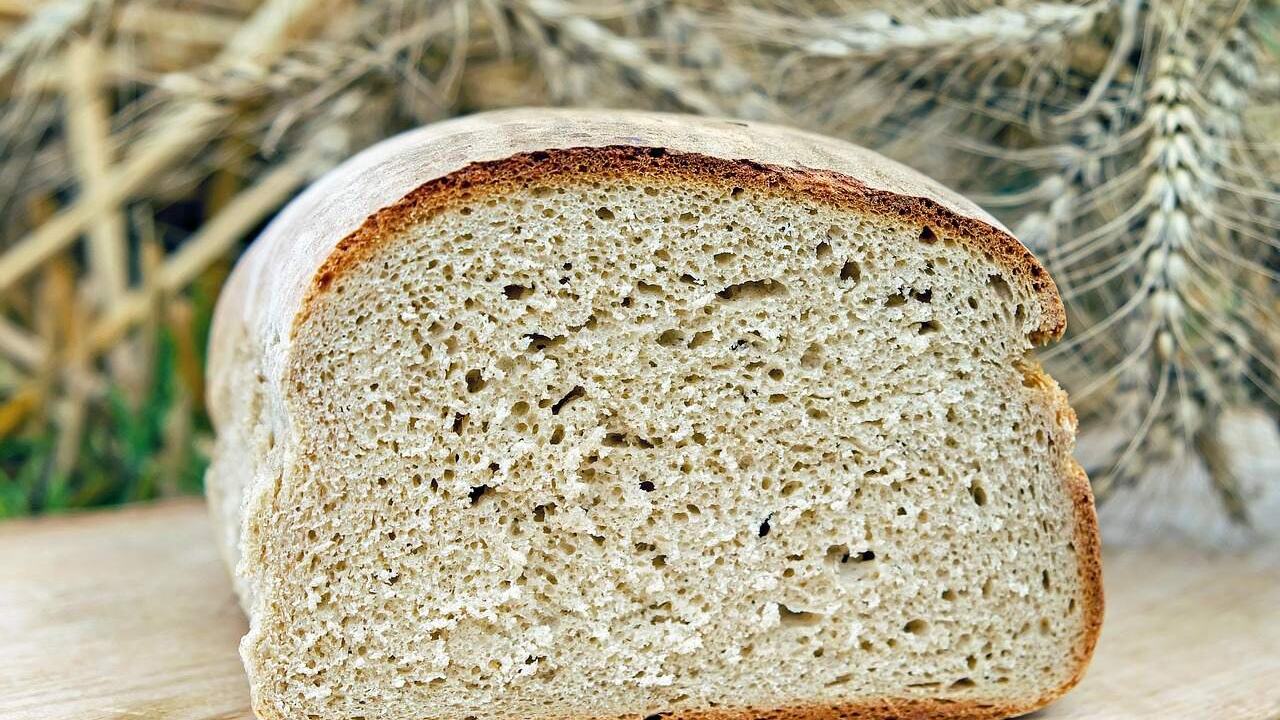
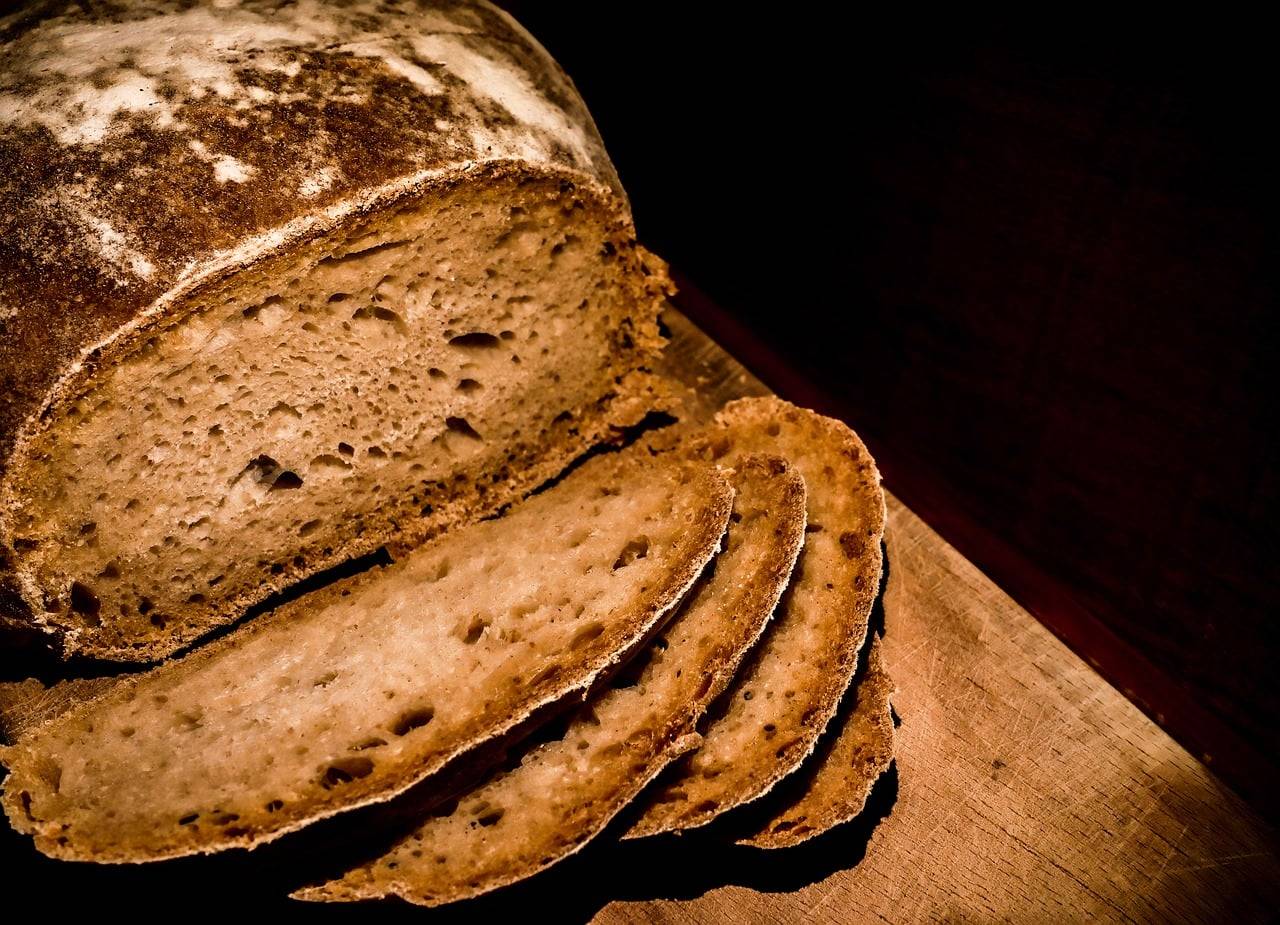
- A tight crumb with gumminess
- A thick, chewy crust
- A few random large holes surrounded by dense areas
- Dough that felt stiff or slow during folding
If this sounds like your bake, the guide says dense sourdough almost always points to under fermentation or starter issues. In other words, the yeast could not make enough gas, or the gluten could not hold it.
The main causes of dense sourdough
Dense bread rarely has one single culprit. The guide lists these usual suspects:
- A weak or acidic starter
- Under fermentation during bulk proof
- Over fermentation that collapses the dough
- Poor gluten development
- Dough that is too cold or too warm
- Incorrect hydration
- Shaping without enough tension
- Lack of steam in the oven
Work through the list from the top. The starter and the bulk ferment are the most common reasons, so they get the most space below.
Is your starter strong enough?
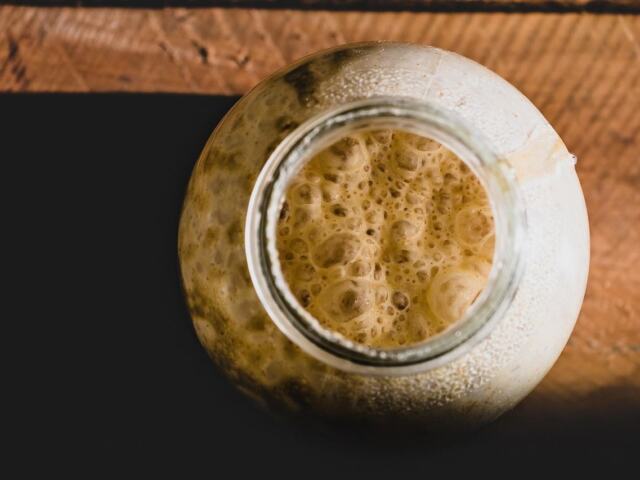
A healthy starter is the foundation of every good loaf, because it holds the wild yeast and lactic acid bacteria that ferment the dough. The yeast does the lifting, while the bacteria build flavour. A bubbly starter is not always a strong starter, since both yeast and bacteria create bubbles but yeast is slower to grow.
The most reliable check is a simple doubling test. At a typical 1:2:2 feed, a healthy starter should double or triple in 4 to 6 hours at about 21°C / 70°F. It should also smell fresh, slightly fruity or yoghurty, and look airy and sponge-like when you scoop into it.
If it does not double at a 1:2:2 feed within 6 hours, the guide says the yeast colony is not strong enough yet. Bake with it anyway and you are likely to get a heavy loaf.
How to fix a weak or acidic starter
A starter can drift out of balance for a handful of reasons. The guide names too much old starter in each feed, long gaps between feedings, warm rooms, chlorinated water and flour with low nutrient content.
Feeding 1:1:1 every time keeps a large amount of old starter and gives it only a little new food. The mixture turns acidic faster because the bacteria have already made acid in the older starter. Smaller seed amounts, like 1:2:2 or 1:3:3, give the yeast more fresh flour to work through.
Signs of an acidic starter
- A strong, sharp smell
- A surface that sinks or wrinkles
- A thin or stringy texture
- Dough made with it that turns sticky and slack
Ways to rebalance it
- Refresh at a higher ratio. Feed it 1:3:3 for a few goes to reduce the acidic side and give the yeast more fresh food.
- Check your water. Some tap water contains enough chlorine to weaken yeast growth, so try filtered water, boiled and cooled water, or water that has sat uncovered for a few hours.
- Adjust for a warm room. Use higher feed ratios like 1:3:3 or 1:4:4, or switch to a stiff starter.
If you are building a culture from scratch, a guide on how to make sourdough starter covers the early days in more detail.
Should you try a stiff starter?
Most people keep a 100% hydration starter, fed with the same weight of flour and water. In really warm or humid rooms, liquid starters turn acidic faster, and when the bacteria outrun the yeast the starter collapses early. A stiff starter at about 50 to 65 % hydration can be more stable.
The guide lists these benefits of a stiff starter:
- Slower acid build up
- More predictable rise
- Stronger gluten structure
- Better performance in hot climates
- Milder flavour in the final bread
To convert, feed one part starter, two parts flour and one part water. It should form a soft dough ball and rise slowly but steadily.
Bulk fermentation: the step that decides the crumb
Bulk fermentation is the stage where the dough ferments and proofs at room temperature, usually with some folding or kneading along the way. A dough that is under fermented will be dense, while a dough that is over fermented will collapse or bake flat. That is why timing matters more than any fixed number of hours.
The guide gives these signs that your bulk ferment is ready:
- The dough is about 40-50 percent bigger
- The surface looks smoother and slightly domed
- Bubbles form along the sides
- The dough feels airy and elastic
- In the poke test, the indent fills halfway back slowly
Use an aliquot jar
The aliquot method makes the rise easier to judge. Take a small piece of your mixed dough, place it in a narrow glass or jar, mark the starting point and let it rise alongside the main dough. Once it has increased by roughly 40-50% and shows bubbles along the sides, your bulk ferment is usually right on track.
Giving the yeast enough time matters because it works through the sugars in the dough and releases carbon dioxide as it goes. Cut that short and the loaf bakes tight and heavy.
Hydration, gluten, shaping and steam
If the starter and the bulk ferment both check out, move down the list of causes. Poor gluten development, shaping without enough tension and a lack of steam in the oven can each leave a loaf tighter than it should be. The guide also points to autolyse and folding as ways to build dough strength before proofing.
Hydration is another suspect. If you are unsure whether your dough is too wet or too dry, the guide to bread hydration percentage explains how to work out the number for your recipe.
Frequently asked questions
Can a bubbly starter still make a dense loaf?
Show answer
Yes. Both yeast and bacteria create bubbles, but yeast is slower to grow, and you need enough yeast activity to raise the dough. Run the doubling test at a 1:2:2 feed instead of judging by bubbles alone.
How do I know when bulk fermentation is finished?
Show answer
Look for dough that is about 40-50 percent bigger, with a smooth, slightly domed surface and bubbles along the sides. An aliquot jar beside the main dough makes the rise easier to read.
Can tap water weaken my starter?
Show answer
It can. The source guide says some tap water contains enough chlorine to weaken yeast growth. Filtered water, boiled and cooled water, or water left uncovered for a few hours gives the yeast a better chance.
Is a stiff starter better than a liquid one?
Show answer
Not in every kitchen. A stiff starter at about 50 to 65 % hydration builds acid more slowly, so it can suit hot or humid rooms. A 100% hydration starter is what most people keep.