Wondering which types of French bread are worth knowing before you shop or bake? Start with the baguette, then add country, rye, wholemeal and regional loaves. Each differs in shape, flour and crust.
This guide belongs to the French baking section of this site.
| Item | Value |
|---|---|
| Typical baguette weight | 250 g |
| Ficelle weight | 120 g |
| Usual baguette length | about 65 cm |
| Minimum rye flour in pain de seigle | at least 65% |
| Year of the decree defining the baguette de tradition française | 1993 |
Figures come from France.fr’s guide to French bread and Wikipedia’s baguette page. They can change, so check the source before you rely on them.
The baguette family: from baguette to flûte
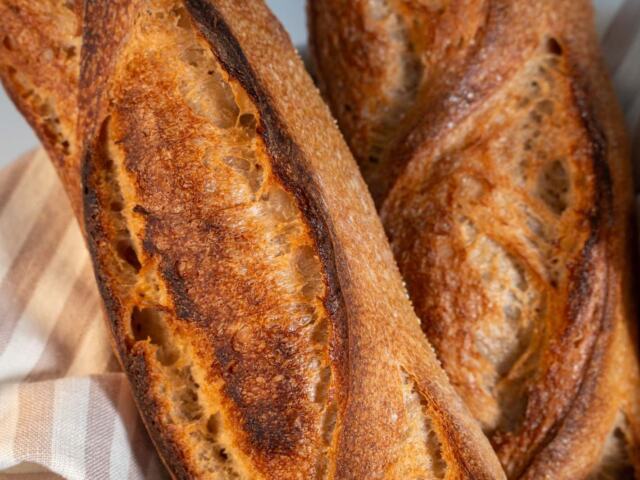
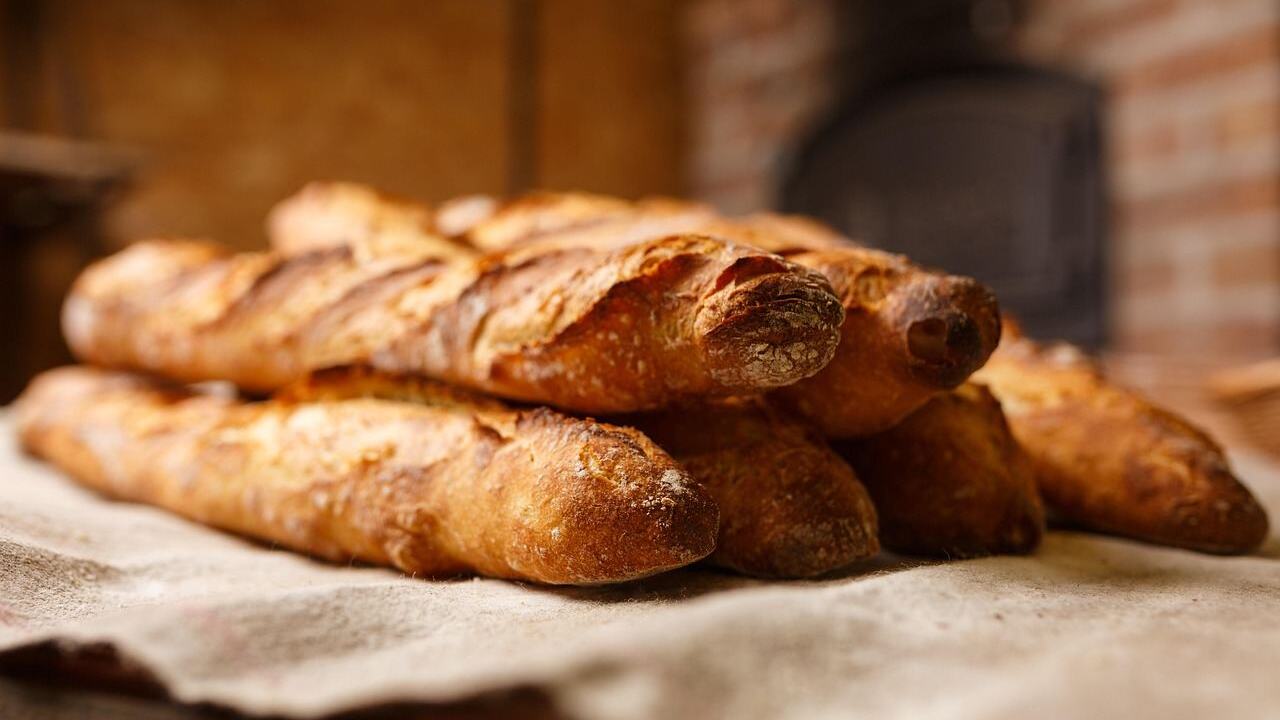
The baguette is the best-known French loaf: long, thin and made from a basic lean dough. According to Wikipedia, it has a diameter of about 5 to 6 cm and a usual length of about 65 cm. Its crisp crust and slender shape make it easy to spot in any bakery.
It is also eaten in huge numbers. France.fr, in a guide published on 3 August 2018, says the French consume 6 billion baguettes every year. They turn up at breakfast, in a lunchtime jambon-beurre and beside the cheese.
The name is younger than you might expect. Wikipedia notes that the word was first recorded as a kind of bread in 1920, and that in 2022 the artisanal know-how and culture of baguette bread was inscribed on the UNESCO Intangible Cultural Heritage Lists.
Bakeries sell the baguette in several sizes and versions:
- Baguette: the standard loaf, which France.fr puts at 250 g.
- Ficelle: the baguette’s thinner “little sister”, weighing 120 g according to France.fr. It suits you if you like plenty of crust or want less bread.
- Baguette tradition: Talk in French says it has a darker crust and is fermented longer than the regular baguette, and it usually costs a little more.
- Flûte: a confusing one. Depending on the area, Talk in French says it is either bigger (about 400 grams) or smaller (about 100 grams) than the typical baguette.
- Demi-baguette: simply half a baguette, handy if you are shopping for one or two people.
The baguette de tradition française is the version defined by law. France.fr explains that a 1993 decree set its compulsory standards: wheat flour, water, yeast or starter, and salt. Some additions, such as soya bean flour, are allowed in very limited quantities.
Freshness is the catch. A baguette usually goes stale within 24 hours, according to Talk in French, which is why a half loaf makes sense for small households. If you would rather bake your own, start with this page on how to make baguette at home.
Round and rustic loaves: pain de campagne and boule
Pain de campagne means “country bread”, yet France.fr says it was invented in the city after the Second World War. The rustic name was chosen to give it a reassuring appeal and to offset the industrial breads that were beginning to fill supermarket shelves.
It is less strictly regulated than the baguette or rye bread. The same guide describes it as recognisable by its roughly elongated ball shape, its rye flour composition and its slightly acidic taste, and suggests soft cheese as a partner.
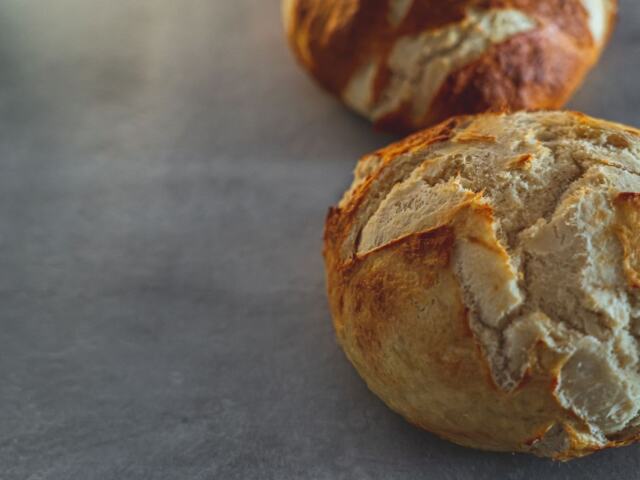
Round loaves are older than the baguette. Talk in French says the baguette did not become the typical French bread until the 1920s, and that earlier bread was shaped in a large, almost round loaf that stayed fresh longer. You can still buy that style as country bread, sometimes called a pain boule.
Some versions use natural leavening rather than commercial yeast. According to the same source, that gives a taste similar to American sourdough, and most boulangeries will slice the loaf for you if you ask.
Rye, wholemeal and cereal breads
Darker loaves use more than plain white wheat flour, and the name often tells you what is inside. Three are worth knowing:
- Pain de seigle (rye bread): to carry this name, France.fr says a loaf must contain at least 65% rye flour. It is recommended with oysters, and Talk in French describes it as darker than regular bread and made from rye and wheat flour.
- Pain complet (wholewheat bread): made with wholewheat flour, which includes the husk as well as the grain. It is generally denser and more crumbly than white bread.
- Pain aux céréales (cereal bread): a blend of flours beyond wheat, often corn, barley, rye, oat and millet, according to Talk in French. Some bakeries add seeds such as sunflower, sesame, poppy or flax.
The rye rule has a catch. Below the threshold, the French edition of the same France.fr guide says you can only speak of “pain au seigle”, a subtle difference in wording that tells you the loaf is rye-flavoured rather than a true rye bread.
On the health side, France.fr’s English guide describes pain complet as high in fibre, with a low glycemic index and an abundance of trace elements and vitamins. Treat that as the guide’s description rather than medical advice; the source also jokes that it is the ideal bread to recover from baguette overload.
Sandwich, flatbread and regional breads
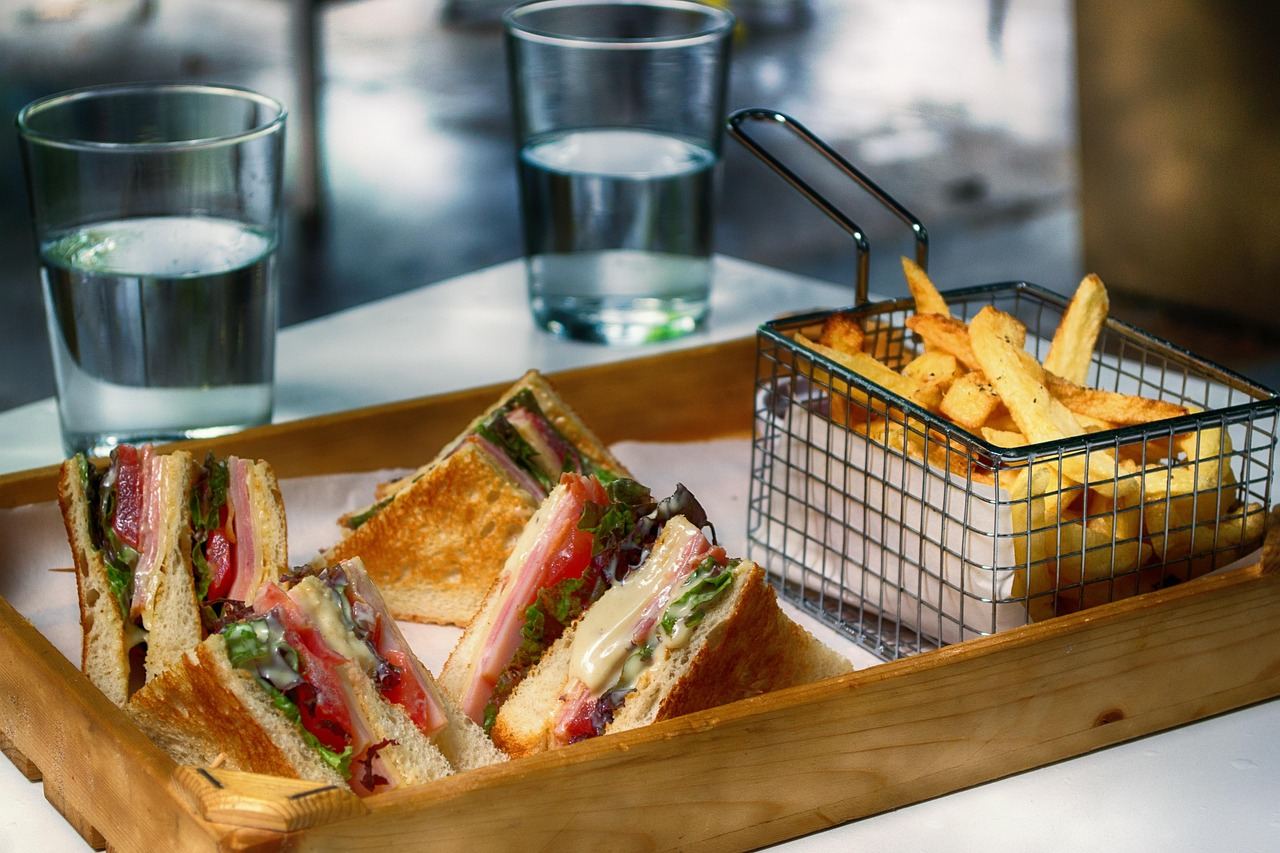
If the thick, crisp crust is not for you, ask for pain de mie. Talk in French compares it to the sandwich bread found across the United States, says it is usually used for toast or sandwiches, and notes that it is often sold sliced.
Fougasse comes from Provence but can now be found across France. The same source says it is not unlike Italian focaccia, with a thinner, lighter crust than French bread, and flatter than a regular loaf. Many bakeries shape it like a flower and add olive oil, olives or sun-dried tomatoes. If you want to try one yourself, here is a fougasse recipe to follow.
Beyond the national favourites, each region keeps its own specialities. France.fr lists these examples and adds that the list is not exhaustive:
- fougasse in Provence
- marguerite in Ardèche
- subrot in Alsace
- cordon in Burgundy
- charleston in Nice
- coupiette in Corsica
- couronne in Bordeaux
Names and shapes change from one bakery to the next, so a loaf with an unfamiliar name is a good reason to ask the baker what is in it. Many bakers also add olives, herbs, bacon or cheese for a twist, as Talk in French points out.
How do you pick the right loaf at the boulangerie?
Start with the shop itself. Talk in French says French consumer law reserves the name boulangerie for businesses that knead, ferment, shape and bake their bread on the premises, without freezing the dough or bread. Anywhere else is merely a dépôt de pain.
For baguettes, Tasting Table, citing BBC Good Food, says authentic ones can only be made with wheat flour, water, salt and yeast, must be sold where they are made, and can neither have preservatives nor be frozen. It also suggests looking for a sign reading “Votre Boulanger. Un artisan authentique”.
Then match the loaf to the meal:
- For a sandwich or jambon-beurre, choose a baguette or, for a softer bite, pain de mie.
- For soft cheese, try pain de campagne.
- For oysters, pick pain de seigle.
- For a smaller portion, ask for a ficelle or a demi-baguette.
- For a flatter, olive-oil bread to tear and share, look for fougasse.
One last choice is the bake. France.fr says the French split into those who like their baguette “well baked” and those who do not, so try both and pick your side.
Frequently asked questions
What is the difference between a baguette and a baguette tradition?
Show answer
According to Talk in French, the traditional version has a darker crust and is fermented longer. It also falls under the 1993 decree, which France.fr describes as limiting it to wheat flour, water, yeast or starter, and salt.
How much rye flour does rye bread need?
Show answer
At least 65%, says France.fr. Loaves with less rye should not be sold as pain de seigle.
Why does a baguette go stale so fast?
Show answer
Talk in French says it usually goes stale within 24 hours. Tasting Table adds that authentic baguettes cannot contain preservatives or be frozen, so eat yours the day you buy it.
Is pain de campagne really a country bread?
Show answer
Not originally. France.fr says it was invented in the city after the Second World War and given a rustic name to counter industrial breads.