Wondering what pastis béarnais really is? It isn’t the aniseed drink: it’s a tall, golden, very soft cake from Béarn, and its thin-layered apple cousin is the pastis gascon.
This guide sits within the wider subject of Béarn cuisine.
| Item | Value |
|---|---|
| Time to make Amélie’s pastis in Mazerolles | More than 48 hours |
| Pastry ribbon an experienced croustadière can draw (pastis gascon) | 8 m long |
| Thickness of that ribbon | 1 mm |
| Tourisme64 page last updated | 2 September 2026 |
The figures come from the Tourisme64 gastronomy page and the Tourism Occitania page on pastis gascon. They can change, so check the source before you rely on them.
What pastis béarnais means
The word pastis sends many visitors straight to the aniseed aperitif. The Tourisme64 gastronomy page says plainly that the Béarn cake has nothing to do with the aniseed aperitif.
According to that same page, pastis béarnais is a tall, golden and very soft cake, traditionally served for breakfast, as a snack or at family meals. That is the cake you are most likely to be offered under the name in Béarn itself.
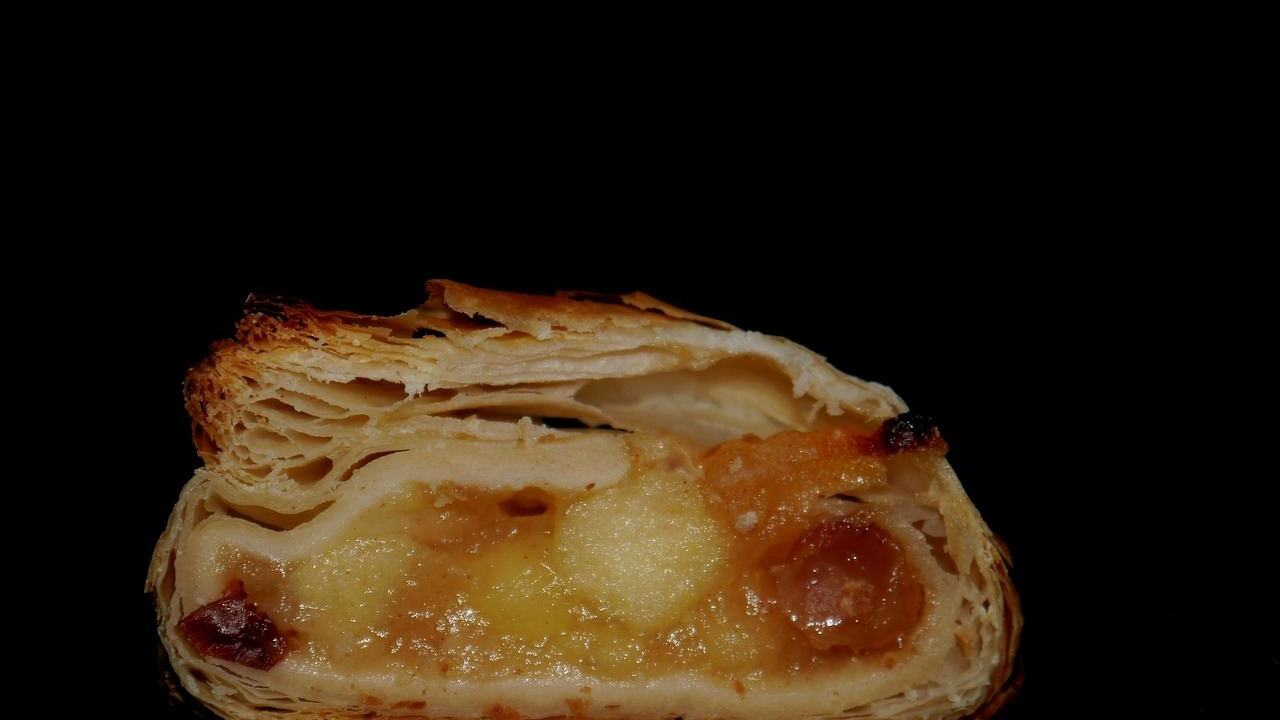
Things get more tangled because a second, very different pastry lives next door. It is made of paper-thin dough layered with apples, and it travels under several names:
- Pastis gascon, also called croustade gasconne, in the Gers, according to Tourism Occitania.
- Feuilleté béarnaise, the name cookery writer Anne Willan gives it in her French Regional Cooking recipe.
- Tourtière, croustade aux pommes or Gersois pastis, among the names listed by the food blog Bake Street.
So when a menu or a baker says pastis, ask which of the two is meant. The soft cake and the layered apple pastry share a name and a corner of south-west France, but they are not the same bake.
The soft cake from Mazerolles
Tourisme64 names one family business as its example of the Béarn cake: Le Pastis d’Amélie in Mazerolles. The page says it is prepared by hand with natural vanilla and anise, and that it takes more than 48 hours to make.
This is a neutral example, not a recommendation, and the page does not say it is the only maker. As of the board’s page updated 2 September 2026, it is the Béarn pastis that the board highlights.
What the description tells you about the cake:
- It is tall, golden and very soft.
- Vanilla and anise are the flavours named.
- It is an everyday family cake, eaten at breakfast, as a snack or at family meals.
Nothing in the supplied description mentions apples or layers of thin pastry. That is the clearest sign you are dealing with a different dish from the pastis gascon.
The thin-layered apple pastry
The apple pastry begins with very little. Tourism Occitania notes that the pastry consists merely of flour, salt and water, and that the skill lies in the hands of the croustadières, a handful of women who keep a centuries-old craft alive.
The same page says an experienced croustadière can produce a ribbon of pastry 8 m long and just 1 mm thick. The yardstick for a good pastis gascon is that it should be the thickness of a bride’s veil.
Anne Willan’s feuilleté béarnaise, from a book published in 1981, tells the same tale. The dough is pulled to a huge, wafer-thin square, so thin that you could read your love-letters through it.
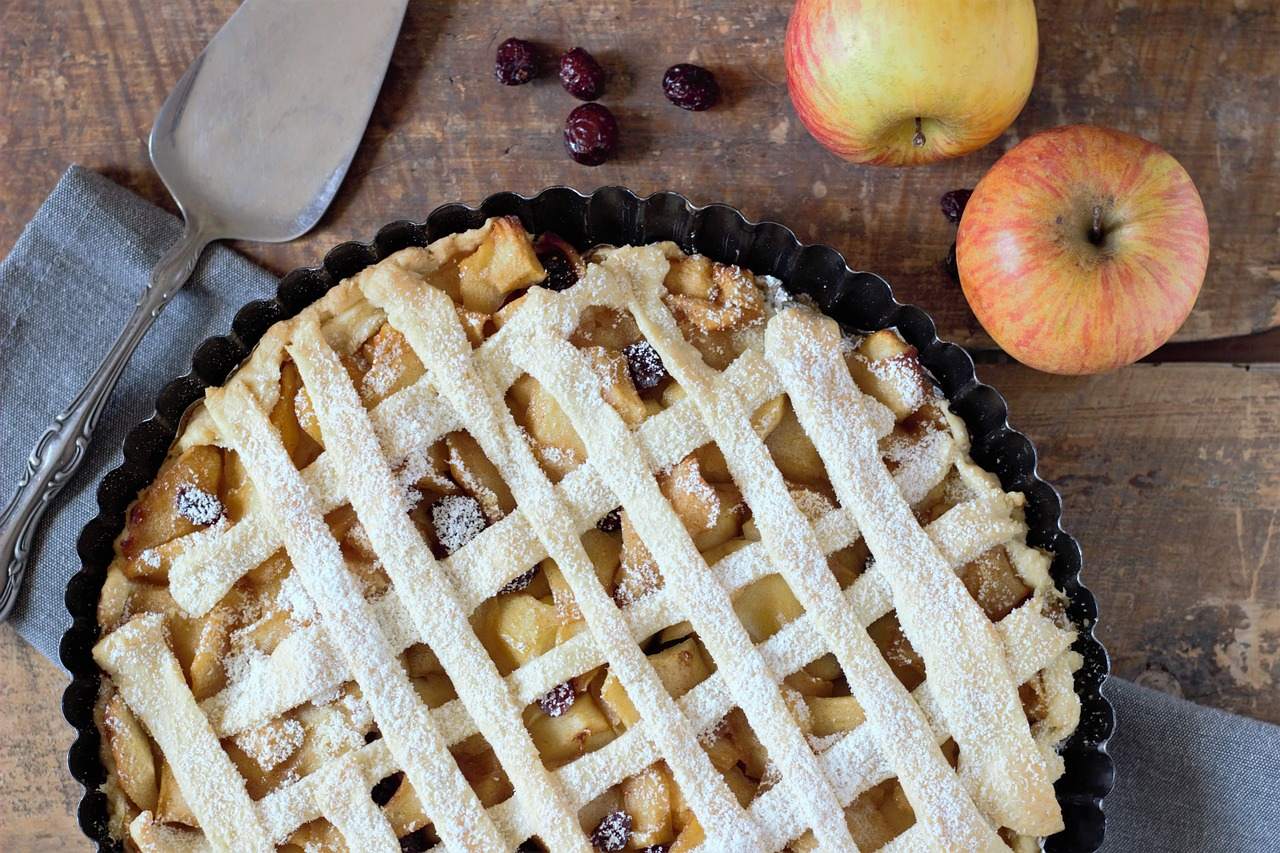
How the pastry and filling come together
Tourism Occitania describes the build of a pastis gascon in a clear sequence, which is worth knowing so you can recognise a well-made slice.
- The dough of flour, salt and water is drawn out on long tables until it becomes translucent.
- The pastry is cut up and arranged in a series of layers inside a mould, forming a soft bed.
- The bed is filled with apples scented with a blend of vanilla and Armagnac.
- Fine strips of tightly packed pastry crown the top and turn golden as the pastis cooks.
The fat is a matter of tradition. Bake Street says the dough was traditionally spread with goose fat, although nowadays it has been replaced by butter, and Willan’s recipe also allows melted butter instead of goose fat.
Willan layers the dough with sugar, Armagnac and apples before baking. Bake Street adds that, traditionally, the apple is left to macerate overnight in Armagnac.
The pastry has its own festival calendar in Lot-et-Garonne. Bake Street says Penne-d’Agenais holds a contest for the best tourtière on the second Sunday of July, and Tournon-d’Agenais holds another traditional festival every August.
Paula Wolfert, in a book published in 2003, describes the pastis of the Landes as closely related to the tourtière, another regional dessert, from Quercy. Her version is flavoured with vanilla, rum, Armagnac and grated lemon zest, which shows how much the filling varies from place to place.
Baking a simpler version at home
Making the real pulled dough is a craft of its own. Bake Street itself calls the artisan method very laborious, and says its recipe is not the traditional one.
That shortcut uses store-bought phyllo dough, about 350 g, and 4 Fuji apples (about 800 g) cooked with brandy. The author folds the dough into small bags filled with almond cream and apple, as set out in the Bake Street recipe.
If you try it, treat the result as a tribute rather than a replica. The soft Béarn cake, with its vanilla and anise, would need a completely different recipe.
Finding and choosing it on a Béarn food trip
Where you find each one differs. Tourism Occitania points to the boulangeries of Auch and many other places in the Gers for the layered pastis gascon, while the soft cake is the one Tourisme64 places in Béarn.
A few questions help at the counter:
- Is this the soft vanilla and anise cake, or the layered apple pastry?
- If it is the apple pastry, is the pastry made by hand?
- Is the apple flavoured with Armagnac, and is the fat butter or goose fat?
A pastry stop fits neatly into a longer tasting list. The sheep’s cheese called Ossau-Iraty cheese is another local product that Tourisme64 describes as emblematic of the local mountains.
Pau has its own sweets too, from the coucougnette confectionery that Tourisme64 mentions to much more besides, and the guide to things to eat in Pau is a natural next read.
Frequently asked questions
Is pastis béarnais the same as the aniseed drink?
Show answer
No. Tourisme64 says the Béarn cake has nothing to do with the aniseed aperitif, even though anise is one of its flavours.
Is pastis béarnais the same as pastis gascon?
Show answer
Not according to the sources supplied. Tourisme64 describes pastis béarnais as a tall, soft cake, while Tourism Occitania describes pastis gascon as layers of paper-thin pastry with apples. Ask the baker which one is on offer.
What is the layered apple pastry made of?
Show answer
Tourism Occitania says the pastry is only flour, salt and water, filled with apples scented with vanilla and Armagnac. Traditionally the dough was spread with goose fat, and butter is common now, according to Bake Street.
Can you make a thin-layered apple pastry at home?
Show answer
You can make a simplified version with store-bought phyllo dough, as in the Bake Street recipe. The author stresses it is not the traditional method, which is very laborious.