Unsure how wet your dough should be? Your bread hydration percentage is water weight divided by flour weight, times 100, so more water means a wetter dough and a more open crumb.
Hydration is one of the core numbers in artisan bread, and this page shows how to read it and work it out.
| Item | Value |
|---|---|
| Hydration formula | Water weight ÷ flour weight × 100 |
| Flour in baker’s percentages | 100% |
| Typical sandwich-bread dough | 60% hydration |
| Ciabatta-style rustic loaf | 80% hydration |
| Range most home bakers work in | 65% to 80% |
| Worked example: 10 ounces water, 15 ounces flour | 67% hydration |
The figures come from America’s Test Kitchen’s baker’s percentage explainer and Crave The Good’s sourdough hydration guide. They can change, so check the source before you rely on them.
What hydration actually measures
Hydration is the weight of water in a dough compared with the weight of flour, written as a percentage. It comes from baker’s percentages, a system in which every ingredient is expressed against the flour, which is always set at 100 percent, as America’s Test Kitchen explains.
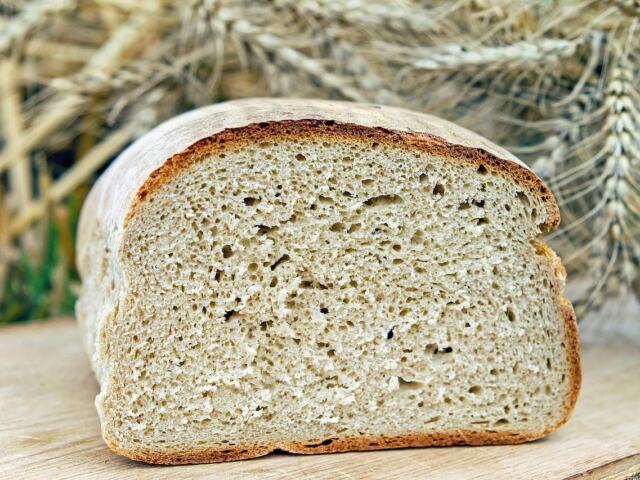
The same source says the hydration level helps a baker predict the texture of the crumb. Generally speaking, the more water in the dough, the more open the crumb.
A percentage also scales well. Crave The Good notes that bakers use it because it scales easily, so a bigger or smaller batch keeps the same ratio.
How to calculate hydration from any recipe
Always work from weights. Tasting Table states that hydration is always determined by the weight of your flour and water in grams, not by volume.
- Weigh all the flour in the recipe.
- Weigh all the water or other liquid.
- Divide the water weight by the flour weight.
- Multiply the result by 100.
That is exactly the method America’s Test Kitchen gives: divide the weight of the water by the weight of the flour, then multiply by 100. If a recipe uses several flours, add them together first, because the total flour always equals 100%, according to Andrew Janjigian’s Wordloaf.
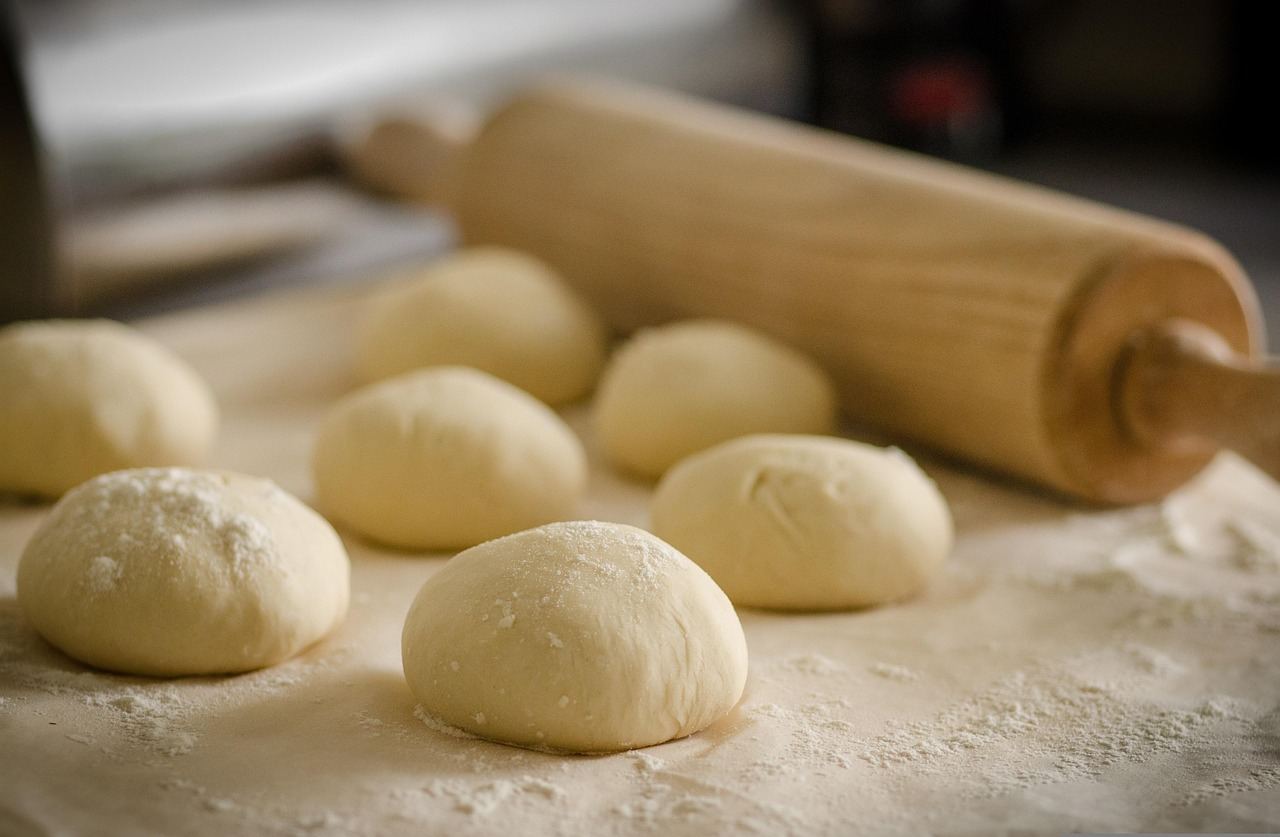
Worked examples
These sums from published guides show the same method with different units:
- 350 g of water and 500 g of flour gives 70% hydration, per Crave The Good.
- 750 g of water and 1000 g of flour gives 75% hydration, per Tasting Table.
- 578 g of water and 850 g of flour gives 68% hydration, in the same Tasting Table piece.
- 10 ounces of water and 15 ounces of flour gives 67% hydration, per America’s Test Kitchen.
Working backwards from a target
You can also pick a hydration and solve for the water. ChainBaker shows that 60% of 500 g of flour is found by calculating 500 x 0.6, which gives 300 g of water.
The same page says hydration can range from as little as 50% to more than 100%.
What different hydration levels do to dough
Tasting Table puts very dry doughs in the 55% range and very hydrated doughs at about 80% or higher, with moderate hydration between those numbers. The table below adds the other benchmarks from the sources above.
| Hydration | What to expect |
|---|---|
| About 55% | Very dry dough |
| 60% | Typical sandwich bread, with a denser, closed crumb (America’s Test Kitchen) |
| 65% to 80% | The range where most home bakers work (Crave The Good) |
| 80% or higher | Very hydrated; a ciabatta-style loaf at 80% has an airy crumb with large, irregular holes (America’s Test Kitchen) |
According to Crave The Good, changing the number shifts several things at once:
- Handling: higher hydration means stickier, wetter, more extensible dough, while lower hydration gives a firmer dough that holds its shape and is easier to handle, especially for new bakers.
- Crust: higher hydration tends to give a thinner, crispier crust, and lower hydration gives a thicker, chewier one.
- Fermentation: more water gives the wild yeast and bacteria in a starter a friendlier environment, so things move faster and the dough needs closer watching.
The same guide adds that open crumb also relies on fermentation. Its advice is to get bulk fermentation right first, then experiment with hydration.
Why flour and starter change the real number
Flour type matters. Wordloaf points out that a dough made entirely with all-purpose flour at 75% hydration behaves very differently from one made entirely with whole-wheat flour, which will be much drier.
Preferments need care too. In recipes with a levain or a biga, you need to break out the flour and water they contain to get the correct calculation, says Wordloaf.
Its example starts with 475 g of flour, 350 g of water and 50 g of 100% hydration levain made from 25 g of flour and 25 g of water. Adding the levain’s parts back in gives 500 g of flour and 375 g of water, which is 75% hydration.
Some bakers calculate “true” or “total” hydration by including the flour and water inside the starter, as Crave The Good describes. That guide also says that if you stay consistent with your starter’s hydration, the math stays predictable across every bake.
If a dough that looked right on paper still bakes into a heavy loaf, read why is my sourdough dense next.
Adjusting hydration without guessing
When a new recipe feels too wet, resist adding handfuls of flour. Tasting Table suggests weighing the flour you add and recalculating the hydration, which lets you recreate the recipe perfectly next time.
- Note the starting flour and water weights before you change anything.
- Weigh every addition, even a small one.
- Recalculate the percentage and write it beside the recipe.
Wetter doughs also demand more from your hands. Crave The Good says the higher the hydration, the harder the dough is to shape, and the bake that follows is a separate skill covered in dutch oven bread baking.
Frequently asked questions
What bread hydration percentage should a beginner start with?
Show answer
One sourdough guide recommends starting around 68% to 72% so you can learn to shape without fighting the dough, according to Crave The Good. The same guide says most home bakers work between 65% and 80%.
Can I measure hydration with cups?
Show answer
No. Tasting Table says hydration is determined by weight, not volume, so use a scale for both flour and water.
Does the flour in my starter count?
Show answer
For the most accurate figure, yes. Wordloaf says to break out the flour and water in a levain or biga, while some bakers keep the starter as a single line item and stay consistent.
Does higher hydration always mean a more open crumb?
Show answer
Not on its own. America’s Test Kitchen says more water generally gives a more open crumb, and Crave The Good adds that open crumb also relies on fermentation.
Can hydration go above 100%?
Show answer
Yes. ChainBaker says hydration can range from as little as 50% to more than 100%.