Wondering how to make baguette at home without a bakery oven? Mix a wet dough, rest it overnight in the fridge, then shape, score and bake it hot with steam. Your regular oven can do the job.
This guide is part of the wider French baking section of the site.
| Item | Value |
|---|---|
| Dough hydration in the Pardon Your French recipe | 69% |
| Good hydration range for baguettes | 65% to 75% |
| Overnight fridge rest (Baking Heritage) | 8-12 hours |
| Oven temperature across the recipes | 230°C (450°F) to 245°C (475°F) |
| Bake time (Baking Heritage) | 18-22 minutes |
| Dough portions per batch (Baking Heritage) | 3 portions of around 240 g each |
The figures come from Pardon Your French and Baking Heritage. Recipes get updated and ovens differ, so check the source before you rely on them.
What defines a baguette?
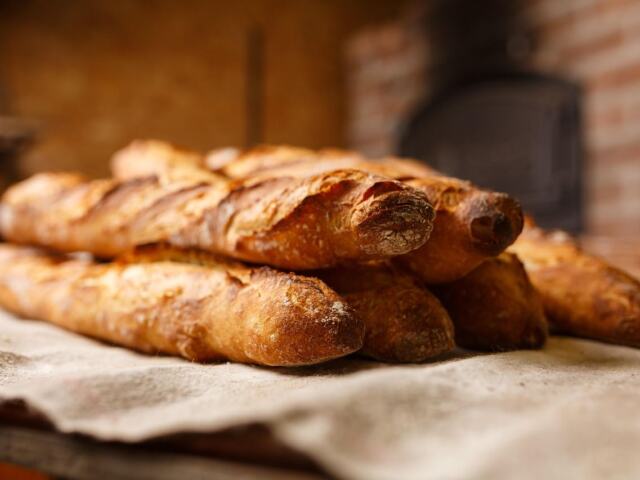
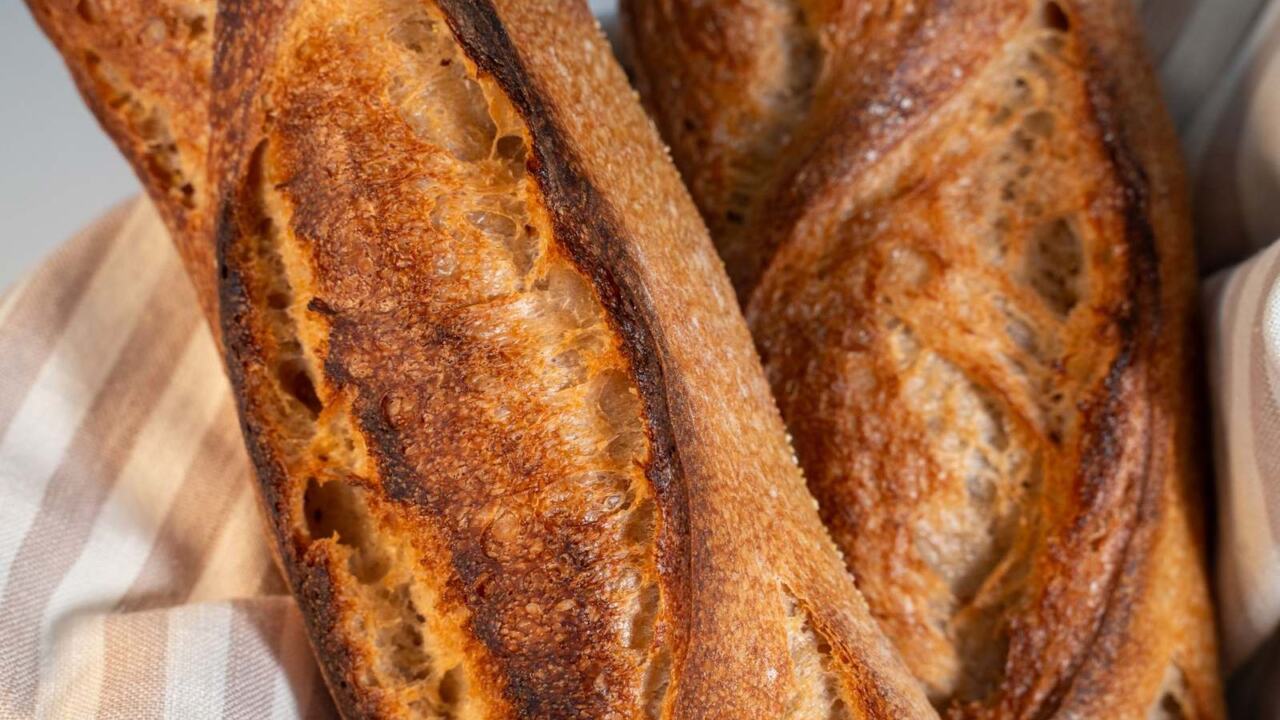
In France a baguette is not one single loaf. Pardon Your French describes a Baguette Ordinaire as extremely light and airy with a pale to slightly golden exterior, while a Baguette Tradition is a bit denser, crunchier and better baked on the exterior.
On the legal side, the same site cites Decree n° 93-1074 of September 13, 1993, which states that traditional French breads must be made from only 4 staple ingredients: flour, water, salt and yeast or leaven. That is the claim as of the site’s post of September 20, 2025. At home you are free to add a pinch of honey or sugar for browning.
Our guide to the types of French bread shows how the baguette sits among its relatives.
For home baking, the number that matters most is hydration, the ratio of water to flour. Pardon Your French puts a good range for baguettes at 65% to 75%, and its own dough sits at 69%.
Ingredients and equipment you need
You need only flour, water, salt and yeast. Active dry and instant yeast both work, but Pardon Your French notes that instant yeast activates more quickly, so you usually need a slightly smaller amount.
French bakeries use Farine T45 for white baguettes and a stronger Farine T55 for Tradition baguettes. At home, Pardon Your French says all-purpose flour works best, while Baking Heritage uses bread flour and Baking Steel blends bread flour with all-purpose.
A little sweetener helps the crust brown in a home oven. Pardon Your French adds light honey and Baking Heritage adds sugar.
One tested formula from Baking Heritage makes three baguettes from these ingredients:
- 450 g bread flour
- 315 g lukewarm water (about 35°C)
- 9 g fine sea salt
- 6 g instant dry yeast (or 9 g fresh yeast)
- 25 g sugar
The kit list is short, and most of it is cheap:
- A large mixing bowl, big enough for the dough to double in size.
- A bowl scraper, because a wet dough is sticky.
- A proofing cloth, or thick kitchen towels folded into U-shaped creases, to hold the loaves in shape.
- A bread lame; a serrated knife or scissors will do in a pinch.
- A baking sheet lined with parchment paper, or a heavy baking stone.
Mixing, folding and the overnight rest
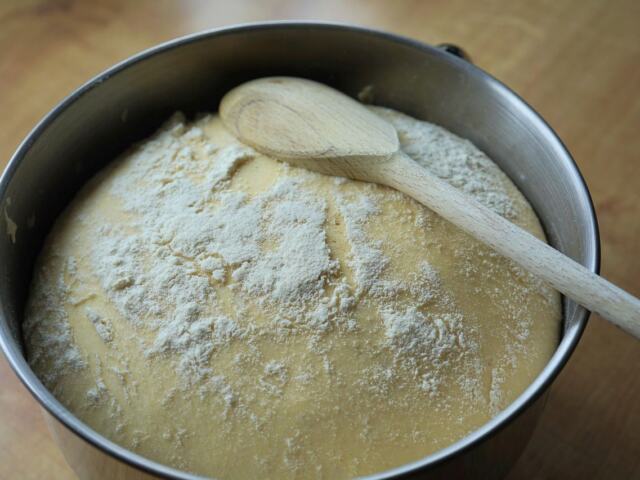
You can mix by hand or with a stand mixer. Pardon Your French stirs everything into a rough, sticky dough and builds strength with 3 sets of stretch and folds, spaced 20 minutes apart over the course of one hour. Baking Heritage kneads with a dough hook instead.
- Mix the flour, water, salt, yeast and sweetener until no dry flour remains. A wooden spoon, or a stand mixer with a paddle or dough hook, all work.
- Wet your hand, slide your fingers under one side of the dough, lift it and fold it over itself. Rotate the bowl 90° clockwise and repeat until you have made 4 folds per set.
- Cover the bowl tightly and refrigerate it overnight, for 8-12 hours in the Baking Heritage recipe.
The slow fermentation is where the flavour comes from. Pardon Your French says it develops both the airy texture and the complex flavours, and Baking Heritage adds that it makes the dough easier to handle.
Some bakers prefer a pre-ferment. Weekend Bakery builds a poolish and leaves it for 12 hours at room temperature before mixing the dough, and our page on poolish vs levain sets out how the two pre-ferments differ.
If you would rather prepare ahead, Baking Steel says you can freeze the portioned dough after the cold ferment. Thaw it in the fridge overnight before shaping and baking.
Shaping, proofing and scoring
On baking day, Baking Heritage lets the cold dough sit at room temperature for 30-45 minutes. You then divide it into 3 equal portions of around 240 g each, shape each into a loose log and rest them, covered, for 15 minutes.
- Flatten one log into a rectangle. Fold the top third down and the bottom third up, pressing gently to build surface tension.
- Roll it into a log about 30-35 cm long, sealing the seam underneath.
- Set each loaf seam-side down on a well-floured linen towel, with folds between them so they do not touch.
- Cover lightly and proof for 45-60 minutes, until slightly puffy.
A traditional baguette is about 60 cm long, according to Weekend Bakery, but that bakery makes its loaves 45 cm at most so they fit its oven. Measure your oven before you decide on a length.
Check readiness with the poke test. Dip a finger in flour and press the dough: if the dent pops half way back out, proofing is just right, while a dent that vanishes means under-proofed and one that stays means over-proofed.
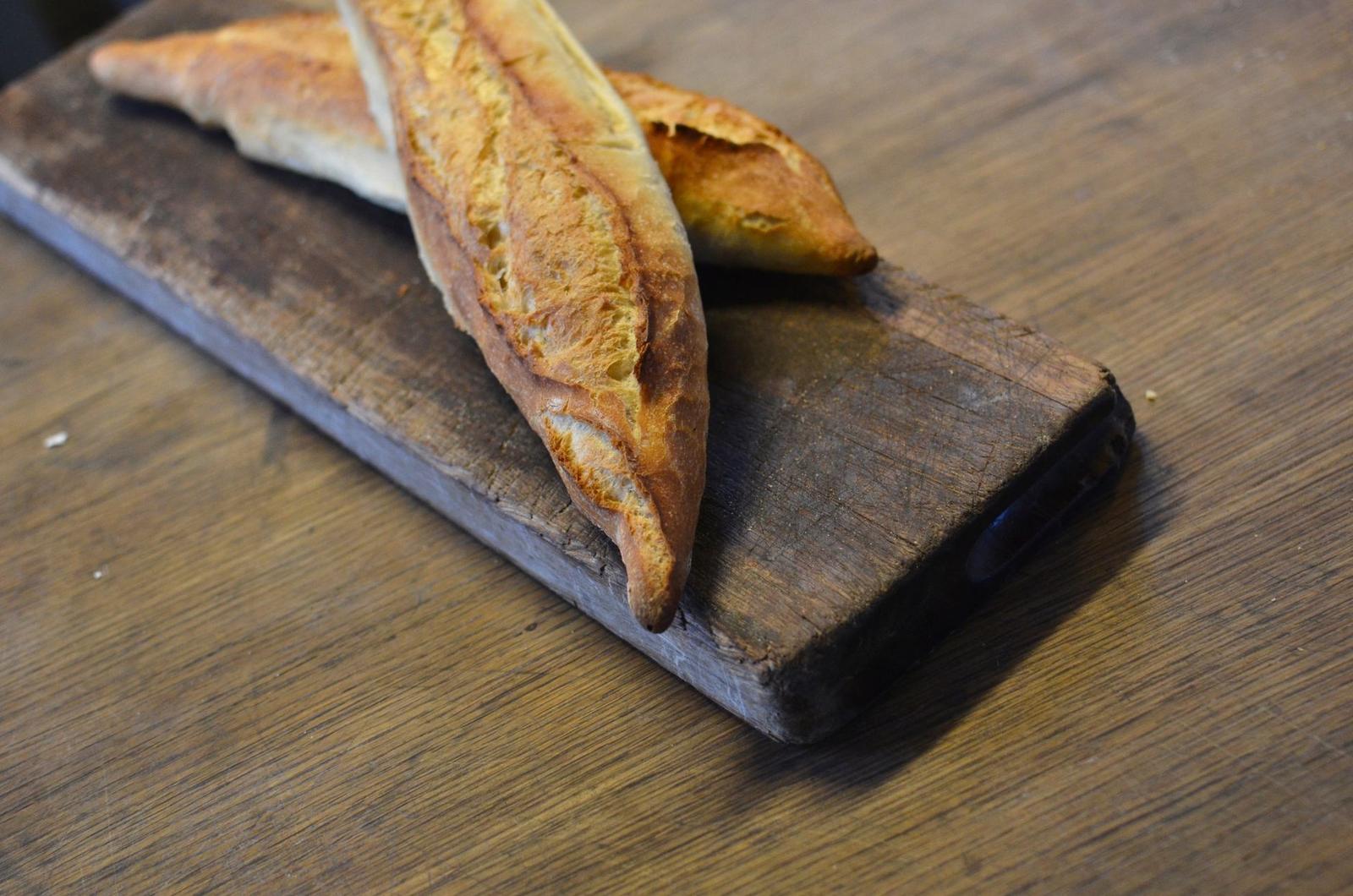
Score the loaves just before they go in. Weekend Bakery advises keeping the cuts within the middle third of the loaf, overlapping them by about one third of their length, with the blade at a 30 degree angle. Baking Heritage makes 3-4 diagonal slashes per loaf.
Baking with steam in a home oven
Oven settings differ between recipes, so treat them as a range and learn how your own oven behaves:
- Pardon Your French: 475°F/245°C on a lined baking sheet.
- Baking Heritage: 230°C (450°F) for 18-22 minutes.
- Weekend Bakery: 240ºC / 465ºF for 27 minutes.
If you own a baking stone, preheat it with the oven. Pardon Your French keeps the same temperature, but the baguettes bake about 5-10 minutes faster and the crust is crunchier.
Steam is what gives the crust its crackle. Baking Heritage places a small glass, cup or oven-safe saucer of just-boiled water on the oven base just before baking, while Baking Steel adds 1-2 cups of ice to a hot pan and says that without steam the crust sets too early.
Handle boiling water and steam with care, and open the oven door slowly. Weekend Bakery also suggests setting the oven door ajar 5 minutes before the bread is ready to release some steam.
A pale, soft bottom crust is the usual home-oven complaint. Baking Steel, a maker of baking steels, blames a lack of thermal mass and suggests preheating a heavy inverted sheet pan for 45 minutes if you have no steel, while expecting a paler, softer bottom crust.
Finally, cool the loaves on a wire rack. Baking Heritage asks for at least 30 minutes before slicing so the crumb can finish setting, while Baking Steel allows at least 15 minutes.
Frequently asked questions
Do I need a baking stone to make baguettes at home?
Show answer
No. The Pardon Your French recipe is designed for a simple baking sheet lined with parchment paper, though a heavy stone helps develop a crustier bread.
Can I use all-purpose flour?
Show answer
Yes. Pardon Your French says all-purpose flour works best in its recipe, and Baking Heritage uses bread flour if you prefer a stronger dough.
How do I make steam without special equipment?
Show answer
Put a small glass, cup or oven-safe saucer of just-boiled water on the oven base just before baking, as Baking Heritage suggests. Take care when you open the oven.
Can I freeze baguette dough?
Show answer
According to Baking Steel, you can portion and freeze the dough after the cold ferment, then thaw it in the fridge overnight before shaping and baking.