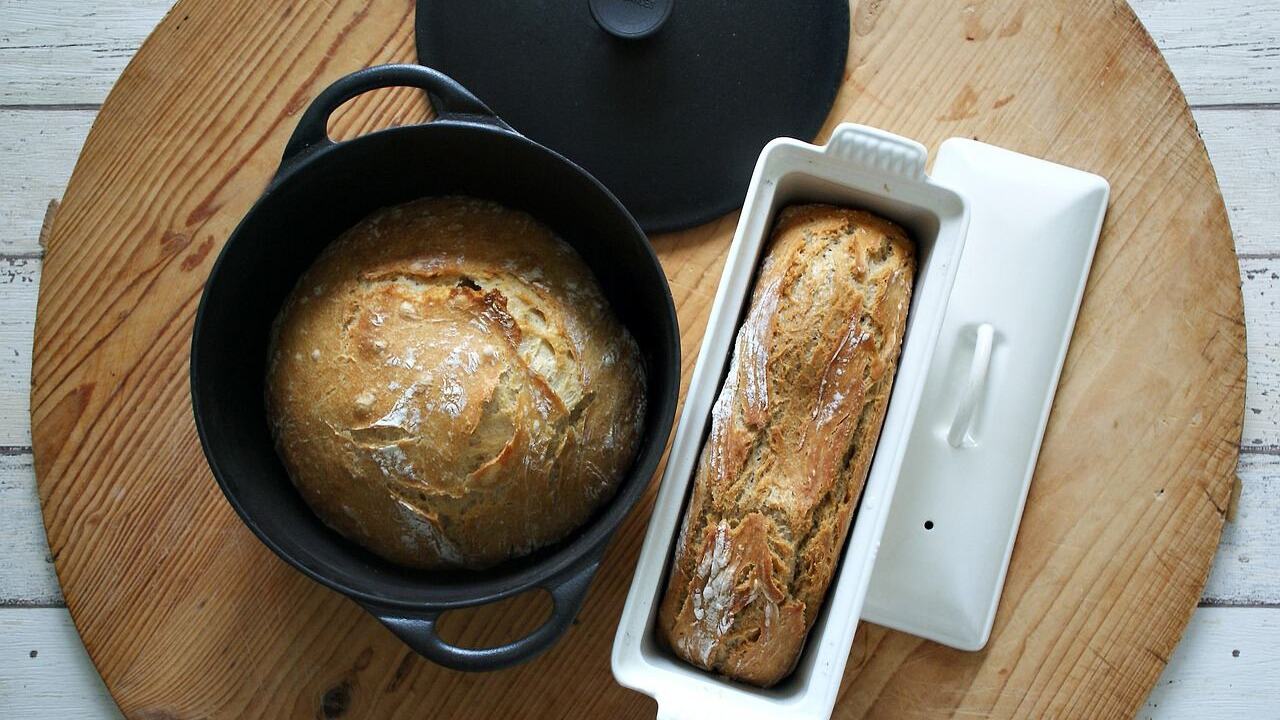
Your loaves come out pale and dull, and you suspect the oven. Dutch oven bread baking fixes that by trapping steam around the dough: preheat the pot, slip the dough in, and put the lid on.
This guide sits within the wider topic of artisan bread, and it focuses on the crust.
| Item | Value |
|---|---|
| Home steam methods King Arthur Baking recommends | 3 methods |
| Boiling water for the preheated cast-iron pan method | About 1 cup |
| Second spray when using a spray bottle | About five minutes into baking |
| Rice flour in the suggested dusting blend | 50% |
| White flour in the suggested dusting blend | 25% |
| Whole wheat flour in the suggested dusting blend | 25% |
These figures come from Tasting Table and King Arthur Baking. Recommendations can change, so check the source before you rely on them.
Why steam gives you a better crust
The crust you admire in a bakery loaf is mostly a steam story. According to King Arthur Baking’s April 2024 guide, steam at the start of baking keeps the outside of the loaf moist and flexible, which prevents the crust from forming before the loaf has achieved full oven spring.
Oven spring is the volume the loaf achieves as it hits the hot oven. If the crust sets too early, the loaf cannot rise to its full height.
Steam also does something for looks and texture. It gelatinizes the starches on the outside of the loaf, which causes that glossy, shatter-y finish.
A dry oven does the opposite. In King Arthur Baking’s test write-up, a loaf baked without steam develops a crust that quickly sets and dries, which impedes expansion and leads to a denser crumb.
Cuts suffer too. The same page says that even if you know how to score bread properly, those cuts will not expand in a dry oven, because you need steam for that.
How a Dutch oven makes its own steam
Professional bakeries use ovens with steam injection. As King Arthur Baking explains, most professional bread ovens have this function, and the chamber is filled with steam in the first half of baking and vented in the last half so the crusts can brown and firm up.
Your home oven cannot do that, but a lidded pot can imitate it. Moisture from the dough has nowhere to go, so the pot becomes a small, sealed steam chamber around the loaf.
The trick, according to King Arthur Baking’s Dutch oven article, is to preheat the pot. Gently slipping risen yeast dough into a searing hot pot and adding the lid creates steam, which results in bread with a crackly crust and a glossy surface that is blistered with bubbles.
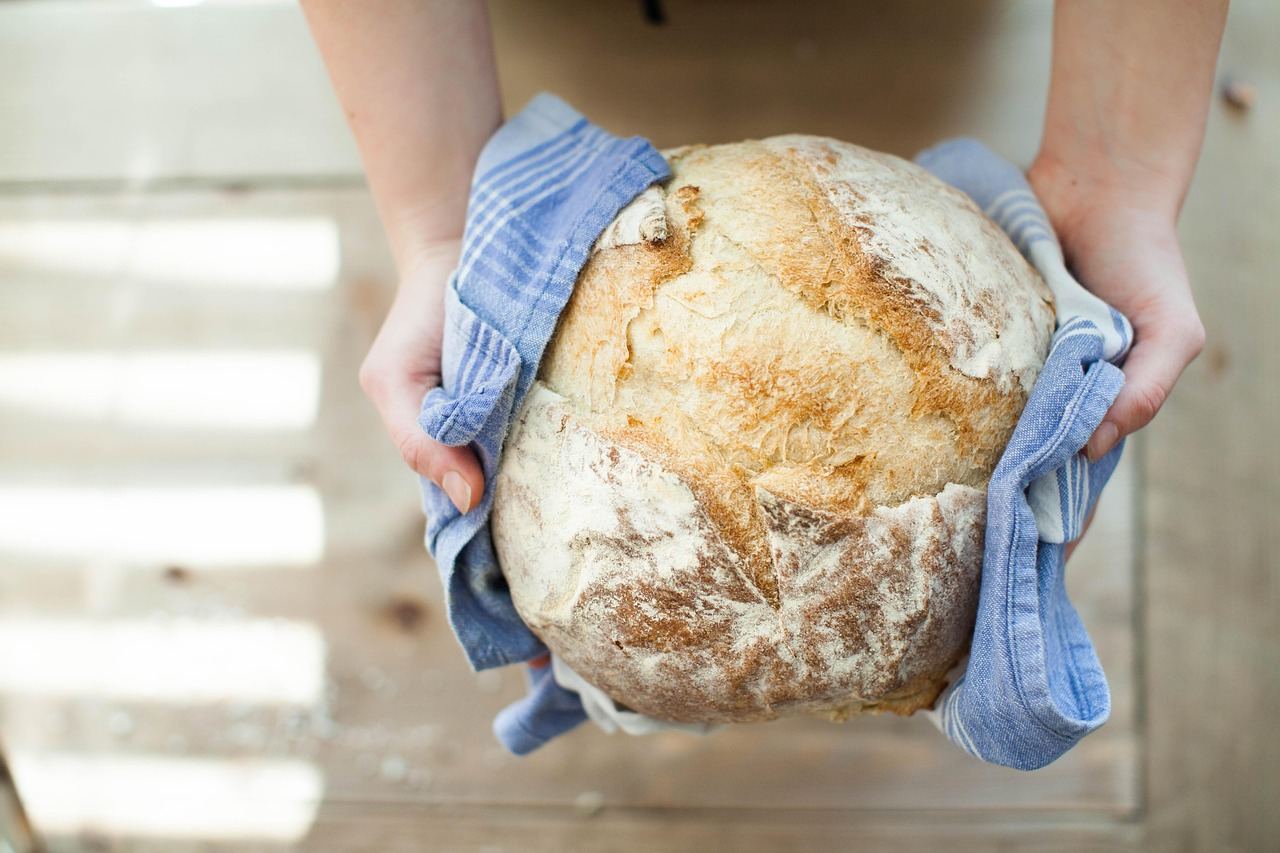
Not every vessel can take this treatment. The same article warns that some bread crocks cannot withstand the intensity of being heated empty and are bound to crack, so check your pot’s heat limits before you start.
Dutch oven bread baking, step by step
The source pack gives the principle rather than a full recipe, so use these steps alongside your own dough recipe. Times and temperatures belong to that recipe.
- Check the pot. Make sure it is designed to be heated empty and has a lid that fits.
- Preheat it empty. A hot pot is what turns the moisture in the dough into steam the moment the lid goes on.
- Dust your proofing basket lightly. A thin coating keeps the dough from sticking without blocking the steam.
- Score the dough. Shallow cuts give the loaf a place to open once steam keeps the surface flexible.
- Lower the dough in gently. Use mitts and take care, because the pot is searing hot.
- Put the lid on straight away. This is the moment the steam is trapped.
- Follow your recipe for lid timing. Professional ovens vent the steam in the last half of baking so crusts can brown, so most recipes have you finish with the steam released.
The wetness of your dough matters at the transfer stage. A very slack dough is harder to lower in cleanly, so it helps to understand bread hydration percentage before you change a recipe.
How does a Dutch oven compare with other home steam methods?
Tasting Table’s April 25, 2022 report summarises three methods that King Arthur Baking recommends for a home oven:
- Spray bottle: spray the loaf lightly before it goes in. The loaf needs a second spray about five minutes into baking.
- Preheated cast-iron pan: put it on the tray under the loaf and fill it with about 1 cup of boiling water.
- Preheated Dutch oven: bake the bread inside, so the pot traps the natural steam the bread releases.
As of that April 2022 report, the Dutch oven was the method King Arthur Baking found most effective. It produced the most desirable color and blistering on the crust, while the spray bottle did not affect the final bread.
The cast-iron pan approach works because the water evaporates quickly, fills the oven with steam and dissipates fast enough for the loaf to finish under drier conditions. A Dutch oven gives you that same effect with one piece of equipment and no boiling water to pour.
Flour and dusting for a blistered crust
Steam only works if it can reach the dough. King Arthur Baking’s crust tips point out that too much flour on the exterior of a loaf creates a dry, powdery surface that acts as a barrier between the dough, where the blisters form, and the steam, which enables them.
The advice is to dust a brotform or couche lightly, with only enough flour to keep the loaf from sticking. A fine-meshed sifter helps.
To use as little flour as possible, the same source recommends this blend:
- 50% rice flour
- 25% white flour
- 25% whole wheat flour
Rice flour is naturally non-stick and releases the loaf better than anything else, according to the same source. That is why it makes up half of the mix.
Mistakes that cost you crust
- Skipping the preheat. Without a searing hot pot, you lose the quick burst of steam the method depends on.
- Using a pot that cannot take dry heat. Some ceramic bread crocks crack when heated empty.
- Dusting too heavily. A thick coat of flour blocks the steam from reaching the surface.
- Scoring and then baking dry. Without steam, the cuts will not expand.
- Relying on a spray bottle alone. It was not found to affect the final bread.
If your crust still disappoints, look at the dough first. Underdeveloped or overworked dough and an oven that runs differently from its dial are common suspects, but the sources here do not measure them, so treat them as things to test rather than facts.
Frequently asked questions
Do I need a special pot for dutch oven bread baking?
Show answer
You need a lidded pot that can be heated empty without damage. King Arthur Baking notes that some bread crocks crack under that heat, so check what the pot’s maker says about high temperatures.
Why does the pot have to be preheated?
Show answer
Because gently slipping risen dough into a searing hot pot and adding the lid is what creates the steam. King Arthur Baking calls preheating the best way to produce steam inside a lidded pot.
Can I get a good crust without a Dutch oven?
Show answer
You can improve it. A spray bottle and a preheated cast-iron pan with about 1 cup of boiling water are the other two methods in Tasting Table’s April 2022 summary, though the Dutch oven was the one found most effective.
Why did my cuts not open up?
Show answer
A dry oven is the likely cause. King Arthur Baking says scored cuts will not expand without steam, so keep the lid on at the start of the bake.