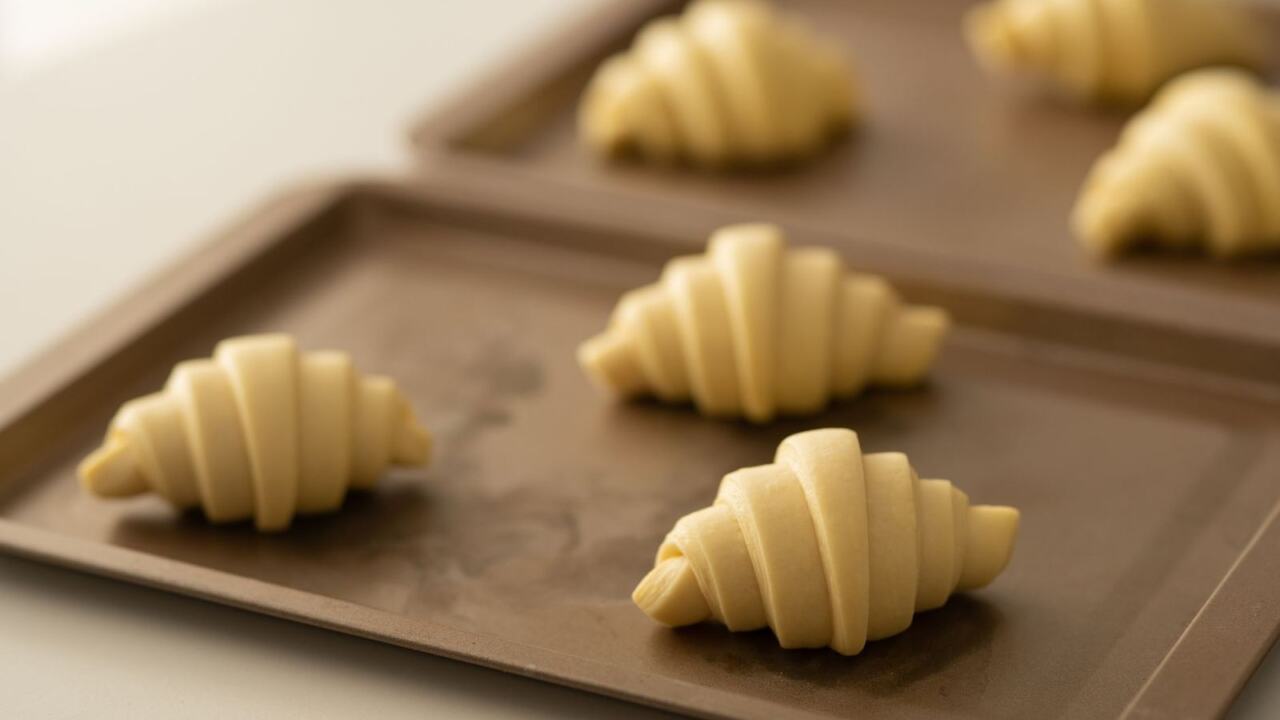
Worried your butter will leak or your layers will merge? Croissant lamination is simply folding a firm, pliable butter block into yeasted dough to build thin, even layers. Keep dough and butter equally firm, and fold square.
If you want more viennoiserie and bread basics, browse the French baking guides.
| Item | Value |
|---|---|
| Dough rest before the butter goes in | 30 to 60 minutes |
| Rest after each fold (CIA Foodies method) | 30 minutes |
| Roll-in butter size | About half the size of the rolled dough |
| Butter block size (Rouxbe recipe) | 10 in x 8 in (25 cm x 20 cm) |
| Finished dough temperature (Rouxbe recipe) | 71-73ºF (21-23˚C) |
| Final sheet thickness before shaping | 1/8 in (3 mm) |
These figures come from the CIA Foodies guide to laminated doughs and the Rouxbe croissant recipe. Recipes differ and figures can change, so check the source before you rely on them.
How croissant lamination builds flaky layers
Lamination means rolling and folding sheets of butter together with sheets of dough, so the pastry becomes a stack of ultra-thin layers. The same method gives you croissant, puff pastry and Danish, according to the CIA Foodies guide. Croissant and Danish doughs are yeasted, while puff pastry is a simple unleavened dough.
In the oven, the butter melts and leaves pockets behind. Steam released from the moisture in the dough pushes those pockets open, and the remaining fat “fries” the dough so the air spaces hold their shape, as the same guide explains.
The number of layers is a balancing act. With too few layers the steam escapes and the pastry will not rise. With too many folds the butter starts to merge into the dough instead of staying separate, which also stops the rise.
Good lamination comes down to a few habits:
- Roll the dough out evenly, so every layer has the same thickness.
- Keep the edges straight and the corners squared at every stage.
- Match the firmness of the butter to the firmness of the dough.
- Rest the dough in the refrigerator between folds so the gluten relaxes and the butter chills.
Prepare the dough and the butter block
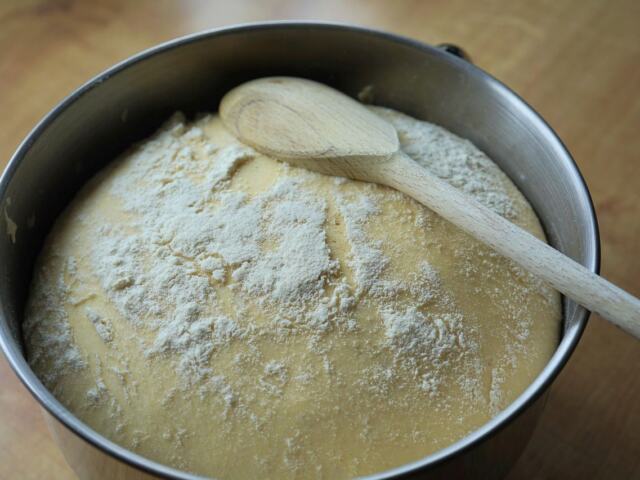
Make the dough the way you would any yeasted bread dough, then shape it into a rough square or rectangle. Wrap it and let it relax in the refrigerator for 30 to 60 minutes, as the CIA Foodies guide describes. Rolling it gently into the lock-in shape before this rest means less handling later.
While the dough rests, work the butter by hand or with a stand mixer until it is smooth and malleable but not overly soft. Butter is not the only fat that can be used in lamination, yet the CIA Foodies guide says it gives the best flavor and mouth feel.
Roll the butter between two sheets of parchment into a rectangle, square off the edges and chill it until it is firm but still pliable. Do not let it get cold, because it should match the dough’s consistency when the two meet. The finished roll-in butter should be about half the size of the rolled dough, and a folded sheet of parchment makes a handy size guide.
The Rouxbe recipe shows one way to shape the block. It flattens 460 g of unsalted European-style butter with 82% fat inside a sheet of acetate, folds the acetate like an envelope, and ends with a butter book of 10 in x 8 in (25 cm x 20 cm). It also aims for a finished dough temperature of 71-73ºF (21-23˚C), so the dough is not warm when the butter goes in.
Test the butter before you use it
Bend the packet slightly. Butter that cracks or shatters is too cold, and butter that smears is too warm.
- If it is too hard, let it stand at room temperature for a few minutes.
- If it is too soft, return it to the refrigerator until it firms up.
- If it tears the dough when you roll, it was too firm; if it oozes out, it was too soft.
These fixes follow the CIA Foodies guide, which also warns that butter should never be so soft that it leaks from the dough.
Lock in the butter and make the folds
The lock-in is the stage where the roll-in butter is first wrapped inside the dough. The CIA Foodies guide lists three ways to do it: envelope, single-fold or threefold. Here is the envelope method followed by the folding sequence.
- Turn the dough out onto a lightly floured surface and roll it into a square or rectangle with straight edges and squared corners.
- Roll the butter into a smaller square and set it diagonally in the center of the dough, so each corner of the butter points to the middle of a side of the dough.
- Fold the corners of the dough over the butter so they meet in the center, like an envelope.
- Roll the package out evenly and make your first fold. A four-fold, also called a book fold, is a common start: fold the outer quarters into the middle, then close the dough like a book.
- Cover the dough and rest it in the refrigerator for 30 minutes.
- Turn the dough 90 degrees, roll it into a rectangle and fold again, then rest it once more.
- Continue until you reach a total of four folds, then give the finished dough a final rest before you use it.
A four-fold quadruples the number of layers each time, and the quarter turn between folds stretches the gluten evenly in all directions, according to the CIA Foodies guide. Brush off excess flour before every fold so it does not end up trapped between the layers.
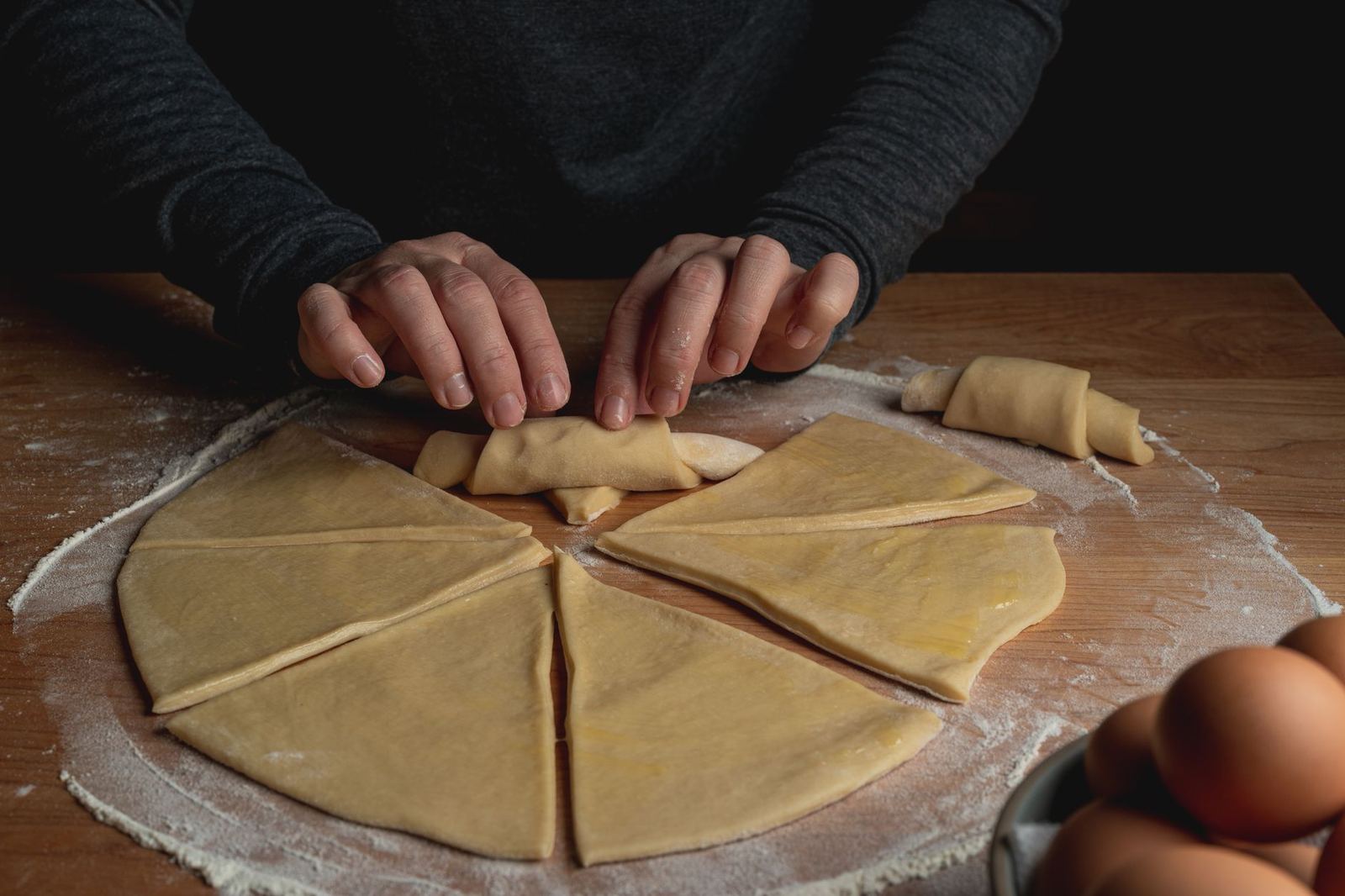
Other methods exist. The Rouxbe recipe uses single turns with a 60 minute rest in the refrigerator between turns, then rolls the sheet to 1/8 in (3 mm) before cutting.
A home baker on The Fresh Loaf forum reports switching from all letter folds to a mix of a book fold and a letter fold. The same post says a final thickness of about 1/8in gave a consistent, airy crumb whether the sheet was rolled with steel guide bars or a tapered pin.
Fix common lamination problems
Most failures trace back to temperature or uneven rolling. Check these causes first when a batch goes wrong:
- Butter oozing: the butter was too soft, so chill it and the dough again before the next roll.
- Butter breaking into bits: it was too firm and cracked as you rolled, so let it stand briefly at room temperature next time.
- Butter exposed: the Rouxbe recipe notes that if the dough is rolled too short, the butter will be exposed and the rolling pin will stick to it, so roll the dough out longer (Rouxbe).
- Dough overlapping: the same recipe says dough that is too long overlaps and gives an improper lamination, and it suggests pushing the dough in slightly.
- Uneven, misshapen rise: too much stress in one direction makes the dough hard to roll, so turn it 90 degrees each time (CIA Foodies).
- Tearing at the final roll: a forum baker found a dough at 46% hydration near impossible to roll without tearing, and noted that lower hydration works better with sheeters than with a rolling pin (The Fresh Loaf).
Do not panic if your first batches look uneven. Rolling pressure and speed take practice, and each batch teaches your hands what well-matched dough and butter feel like.
How should you plan timing and temperature?
Lamination works best as a slow, spread-out job. The CIA Foodies guide says the length of each rest depends largely on the temperature of your kitchen, so a warm room means the butter softens sooner and needs more time in the refrigerator.
The Rouxbe recipe splits the work across two days. The dough is mixed and wrapped tightly on the first day, rests overnight in the refrigerator, and is rolled and turned on the second day.
Practice the fundamentals on simpler doughs while you build confidence. A lean loaf such as a pain de campagne recipe teaches dough handling and fermentation, and you can compare an enriched dough in this brioche recipe, where the butter is mixed in rather than folded in.
Frequently asked questions
How many folds does croissant dough need?
Show answer
The CIA Foodies guide describes a total of four folds, with a 30 minute rest between each. More folds can cause the layers to merge, which stops the dough from rising.
Should the butter be cold or soft?
Show answer
Neither. It should be firm but still pliable, with the same consistency as the dough, as the CIA Foodies guide explains. Butter that is too hard can tear the dough, while butter that is too soft will ooze out.
How thin should the dough be before shaping?
Show answer
The Rouxbe recipe rolls the finished strip to 1/8 in (3 mm) thick. A forum baker on The Fresh Loaf likewise aims for about 1/8in.
Can I laminate with a fat other than butter?
Show answer
Several fats can be used for lamination. The CIA Foodies guide says butter lends the best flavor and mouth feel.